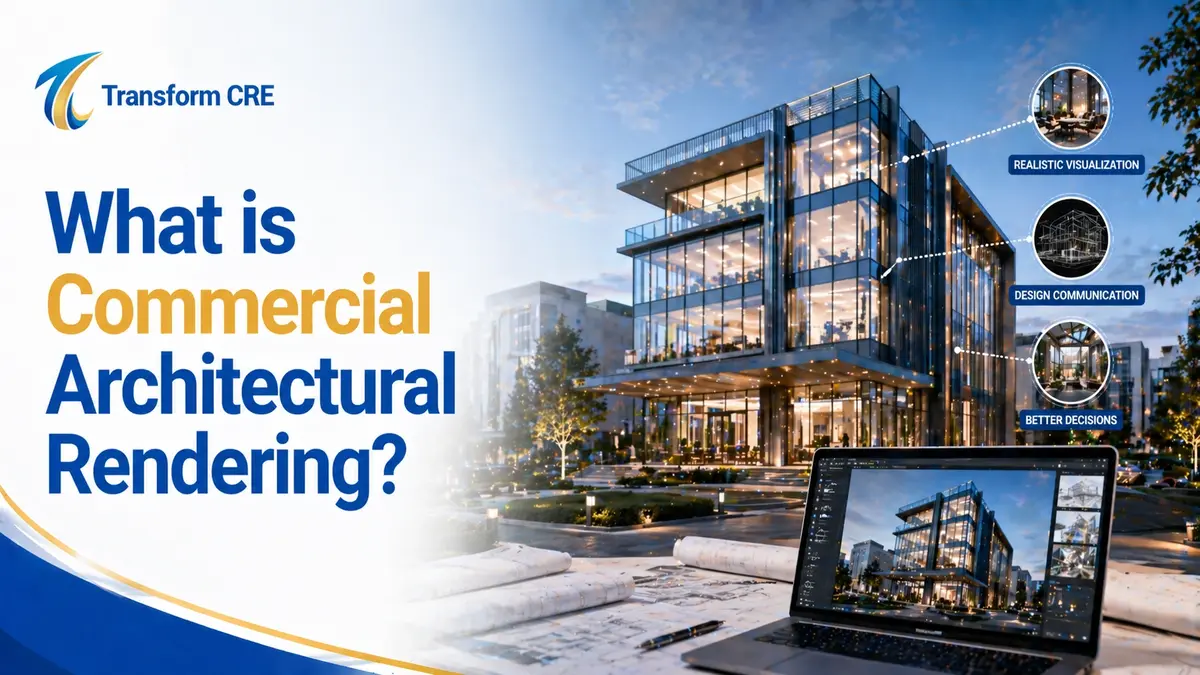
What is Commercial Architectural Rendering?
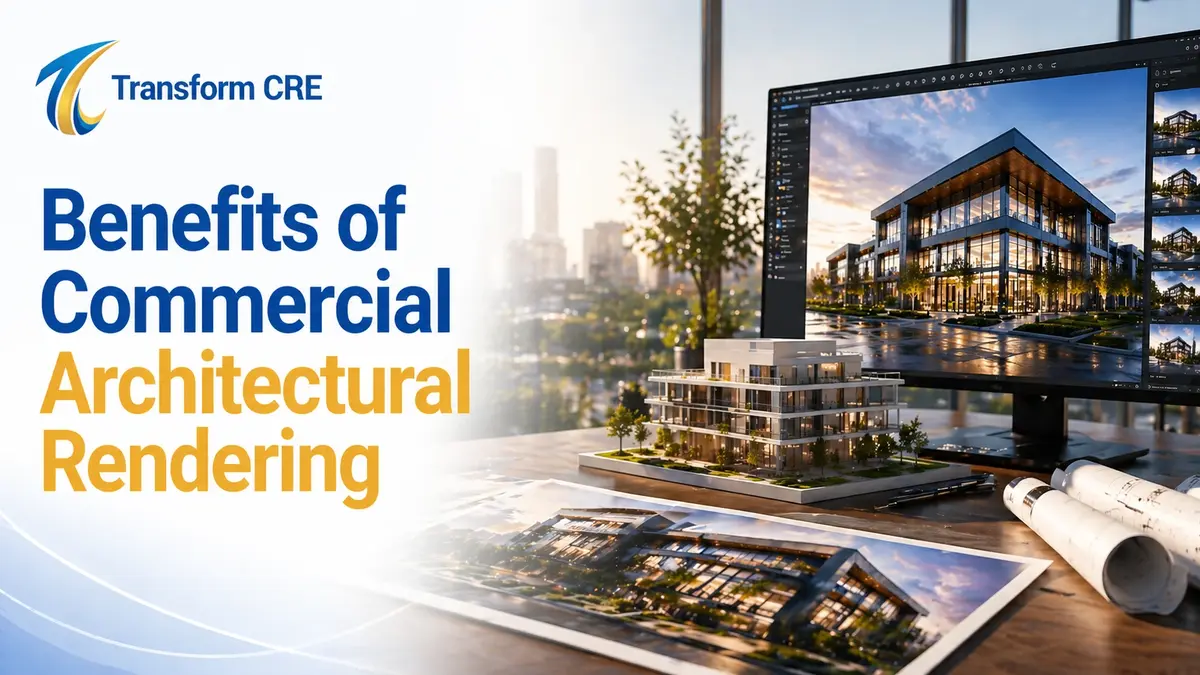
Commercial architectural rendering is the process of creating visual representations of commercial buildings using 2D or 3D digital techniques before construction begins. It is used to transform building design concepts into clear, realistic visuals that support planning, communication, and decision-making in commercial real estate and property development.
These renderings help architects, developers, and stakeholders visualize commercial spaces such as offices, retail stores, and large developments. They are commonly presented as high-quality images, 3D animations, or walkthroughs, making them essential tools for design evaluation, client presentations, and marketing purposes.
Understanding Commercial Architectural Rendering
Commercial architectural rendering brings together three core ideas: commercial projects, architectural design, and digital visualization. “Commercial” refers to business-focused properties such as office buildings, retail spaces, hotels, and mixed-use developments. “Architectural” relates to the planning and design of structures, including layout, materials, and spatial organization. “Rendering” is the process of creating visual representations that illustrate how these designs will appear in a real-world environment.
In the context of commercial real estate and development, this form of architectural visualization is used to present building concepts in a clear and realistic way. Within architectural design workflows, it helps translate technical plans into visuals that are easier to understand and evaluate. It is widely used across industries such as real estate development, urban planning, and property design, where accurate and engaging visuals support communication, planning, and project presentation.
What Elements Are Included in Commercial Renderings?
Commercial renderings combine multiple visual elements to create a complete and realistic representation of a commercial project. These elements work together to show not just the building, but also its environment, usage, and overall atmosphere.
Key Elements Included in Commercial Renderings:
Architectural Structures
The primary focus includes commercial buildings such as offices, retail stores, and complexes. Key features like facades, entrances, windows, and rooftops define the overall design.Surrounding Environment
The building is placed within a realistic setting that may include landscaping, roads, sidewalks, parking areas, and nearby structures to reflect the urban context.Lighting and Atmosphere
Both natural and artificial lighting are used to create mood and realism. Shadows, reflections, and time-of-day effects enhance the visual impact.Materials and Surface Details
Materials such as glass, concrete, metal, and wood are applied with detailed textures and finishes to accurately represent the building’s appearance.Human and Contextual Elements
People, vehicles, and street elements like benches or lighting poles are added to show scale, movement, and real-world usage.Branding and Commercial Details
Commercial-specific features such as storefront signage, logos, and advertising displays help convey the business identity and purpose of the space.
Together, these elements create a high-quality, lifelike visualization that clearly communicates how a commercial space will look and function in a real-world environment.
How Commercial Architectural Rendering Works
Commercial architectural rendering follows a structured digital workflow that transforms design concepts into visual output. The process begins with architectural inputs such as plans or CAD drawings and progresses through modeling, visualization, and final rendering. It involves creating a 3D representation, applying materials and lighting, and using rendering software to generate realistic images. The final stage involves post-production, where visuals are refined and enhanced for presentation, ensuring a clear and polished result for stakeholders.
What is Commercial 3D Rendering in Architecture?
Commercial 3D rendering is the process of using digital models to visualize commercial buildings in a realistic way. It converts architectural designs into detailed images or environments, allowing projects to be presented with depth, lighting, and photorealistic quality. This makes it an essential part of modern architectural visualization for commercial projects.
How Are Commercial Renderings Created Step-by-Step?
Commercial renderings are typically created through the following steps:
Collecting Project Data
Architectural plans, CAD drawings, and reference materials are gathered.Creating the 3D Model
A digital model of the building and its surroundings is developed.Applying Materials and Textures
Surfaces are defined using materials such as glass, metal, or concrete.Setting Up Lighting and Environment
Lighting conditions are added to simulate real-world scenarios.Rendering the Scene
Rendering software generates the visual output from the 3D model.Post-Production and Refinement
Final adjustments are made to enhance quality, color, and realism.
Core Components of Commercial Architectural Rendering
High-quality commercial architectural renderings are built on several core components that work together to create realistic, accurate, and visually compelling results. These components are not steps in a process but foundational elements that define how a rendering looks and performs. Each one contributes to realism, depth, and overall presentation quality, helping transform a digital model into a professional visual representation used in commercial architecture and real estate.
3D Modeling and Scene Creation
3D modeling forms the structural foundation of a commercial rendering by defining the geometry and layout of the project. It translates architectural plans and CAD data into a digital model that represents buildings, surrounding elements, and spatial relationships. Accurate modeling ensures that proportions, scale, and design details are correctly represented, which directly contributes to visual clarity and realism.
Materials, Textures, and Lighting
Materials and textures determine how surfaces appear, while lighting defines how those surfaces interact within the scene. Elements such as glass, concrete, and metal are enhanced with detailed textures, while natural and artificial lighting create reflections, shadows, and depth. This combination enhances visual authenticity and plays a key role in achieving photorealistic results.
Camera Angles and Composition
Camera angles and composition control how the scene is viewed and interpreted. Strategic placement of the camera establishes perspective, highlights key architectural features, and guides the viewer’s attention. Effective composition improves visual storytelling, enhances scale perception, and makes the rendering more engaging for presentations and marketing.
Rendering and Post-Production
Rendering engines generate the final images from the 3D scene by processing lighting, materials, and geometry. Post-production then refines these visuals by adjusting colors, contrast, and overall quality. This stage enhances realism and ensures the final output is polished, making it suitable for client presentations, marketing materials, and commercial use.
Types of Commercial Architectural Renderings
Commercial architectural renderings can be categorized based on perspective, purpose, and visualization style. Each type serves a specific role in commercial projects, helping stakeholders understand different aspects of a building or development. The main types include exterior, interior, aerial, marketing-focused renderings, and floor plan visualizations, each designed for a particular stage of planning, presentation, or promotion.
Exterior Commercial Rendering
Exterior commercial rendering focuses on the outside of buildings, including facades, entrances, and surrounding landscape design. It shows how a structure fits within its urban context, making it useful for marketing, planning, and approval processes. These renderings create a strong first impression by highlighting the visual appeal of the building in a real-world setting.
Interior Commercial Rendering
Interior rendering visualizes the inside of commercial spaces such as offices, retail stores, and hospitality environments. It focuses on layout planning, furniture arrangement, lighting ambiance, and overall usability. This type is commonly used for design planning and client presentations to showcase how a space will function and feel.
Aerial and Large-Scale Development Renderings
Aerial renderings provide a bird’s-eye view of large-scale developments, including commercial complexes, city blocks, and mixed-use projects. They highlight spatial relationships, surrounding infrastructure, and the overall layout of a development. These renderings are especially valuable in urban planning and large project presentations.
Commercial Real Estate & Marketing Renderings
These renderings are created specifically for real estate marketing and property promotion. They are used in brochures, websites, and advertising campaigns to attract investors and buyers. With a strong focus on high realism and visual appeal, they help communicate the value and potential of a commercial property.
Floor Plans and Spatial Renderings
Floor plan and spatial renderings illustrate the layout and organization of interior spaces. They can be presented in 2D or 3D formats to show room arrangements, circulation paths, and space usage. These renderings are essential for understanding how a commercial space is structured and how it will be used in practice.
What Types of Commercial Properties Are Visualized?
Commercial architectural rendering is used across a wide range of property types within commercial real estate and property development. It helps visualize different kinds of commercial spaces, each with unique design requirements and target audiences.
Common Types of Commercial Properties Visualized:
Office Buildings
Used to present layouts, workspace design, and overall functionality for businesses and corporate environments.Retail Spaces and Shopping Centers
Focus on storefront design, customer experience, and branding to attract tenants and shoppers.Hotels and Resorts (Hospitality Projects)
Highlight ambiance, interior design, and guest experience to support marketing and investment decisions.Mixed-Use Developments
Combine residential, commercial, and recreational spaces, requiring comprehensive visualization to show how different components interact.Industrial Facilities and Business Parks
Used for large-scale developments to illustrate layout, infrastructure, and operational flow.
Each of these property types serves different stakeholders such as developers, investors, and tenants, and requires tailored architectural visualization to effectively communicate design intent and project value.
Output Formats in Commercial Architectural Rendering
Commercial architectural renderings can be delivered in different formats depending on project goals, audience needs, and the level of interaction required. These formats define how the final visuals are presented and experienced, ranging from simple static images to fully immersive environments. Each format serves a specific purpose, whether for presentations, marketing, or interactive exploration.
Static Image Renderings
Static renderings are high-resolution still images created from fixed viewpoints. They are widely used in brochures, websites, and presentations to showcase commercial buildings clearly and effectively. Their simplicity makes them one of the most common and accessible formats in architectural visualization.
3D Animations and Walkthroughs
3D animations and walkthroughs provide dynamic, video-based visualizations that simulate movement through a commercial space. They allow viewers to experience the layout and flow of a project, making them highly effective for presentations and marketing campaigns.
360-Degree and Interactive Renderings
360-degree and interactive renderings enable users to explore a space from multiple angles. These formats are often web-based and allow viewers to control their perspective, offering a more engaging and flexible experience compared to static visuals.
Real-Time and Immersive Rendering Technologies
Real-time rendering technologies allow instant interaction with a digital environment. This includes immersive experiences such as virtual reality (VR) and augmented reality (AR), where users can explore commercial spaces in a highly realistic and interactive way. These formats are increasingly used for advanced visualization and decision-making.
Purpose and Benefits of Commercial Architectural Rendering
Commercial architectural rendering is more than just a visual tool—it plays a critical role in planning, communication, marketing, and decision-making. By transforming design concepts into realistic visuals, it helps architects, developers, and stakeholders better understand projects before construction begins. This leads to more informed decisions, improved collaboration, and stronger project outcomes across commercial real estate and development.
Visualization Before Construction
Commercial renderings convert architectural plans into realistic visuals, allowing projects to be seen before they are built. This helps identify potential design issues early and enables adjustments during the planning phase. As a result, teams can refine concepts more effectively and avoid costly changes later in the project.
Stakeholder Communication and Approvals
Renderings help communicate complex design ideas in a clear and accessible way. This allows clients, investors, and regulatory authorities to better understand the project, which improves collaboration and speeds up approval processes. As a result, misunderstandings are reduced and decision-making becomes more efficient.
Marketing and Commercial Property Sales
Commercial renderings are widely used in real estate marketing to promote properties through brochures, websites, and advertising campaigns. This helps developers showcase projects before construction is complete, enabling pre-leasing and early investment. As a result, renderings play a key role in attracting buyers, tenants, and investors.
Design Accuracy and Risk Reduction
By providing detailed visualizations, rendering helps identify design flaws and inconsistencies early in the development process. This improves design accuracy and supports better decision-making. As a result, projects can reduce risks, control costs, and minimize delays during construction.
Where Commercial Architectural Rendering Is Used
Commercial architectural rendering is used across multiple industries and stages of project development, particularly in real estate, architecture, and urban planning. It supports key activities such as planning, presentations, approvals, and marketing by providing clear visual representations of commercial projects. From early design concepts to final project approvals, rendering plays a practical role in helping professionals communicate and evaluate ideas in real-world scenarios.
Commercial Real Estate Development Projects
In commercial real estate development, rendering is used during planning and development phases to visualize entire projects before construction begins. It helps developers, architects, and project teams align on design concepts and coordinate effectively throughout the development lifecycle.
Office and Retail Space Planning
In office and retail planning, renderings are used to design and evaluate layouts, interiors, and spatial organization. They help businesses and designers optimize space usage and make informed decisions about functionality and user experience.
Investor Presentations and Pre-Sales Campaigns
For investor presentations and pre-sales campaigns, renderings are used to communicate project vision and value. They are included in presentations and marketing materials to attract investors, secure funding, and support property sales before construction is completed.
Urban Planning and Municipal Approvals
In urban planning, renderings are used to present development proposals to authorities and stakeholders. They help illustrate how a project fits within its surroundings, making it easier for municipalities to assess impact, ensure compliance, and approve projects.
Commercial Architectural Rendering Services
Commercial architectural rendering is offered as a professional service to support developers, architects, and real estate companies in visualizing commercial projects. These services help transform design concepts into clear visual outputs for planning, presentation, and marketing. Depending on the project scope, level of detail, and required output format, services can vary, but they are generally tailored to meet the specific needs of commercial clients.
What Do Commercial Rendering Services Include?
Rendering services typically include 3D modeling, architectural visualization, and the creation of interior and exterior renderings. They may also involve animations, walkthroughs, and revisions to refine the final output. These services focus on delivering accurate and visually clear representations of commercial projects based on client requirements.
Who Provides Commercial Rendering Services?
These services are provided by specialized visualization studios, architectural firms, and freelance 3D artists. In many cases, dedicated 3D visualization experts or agencies handle complex commercial projects that require a high level of detail and coordination with design teams.
What Deliverables Do Rendering Companies Provide?
Clients usually receive high-resolution images, animations, and interactive visuals as final deliverables. In some cases, outputs may also include 360-degree views or VR-ready assets, which are used for presentations, marketing materials, and stakeholder communication.