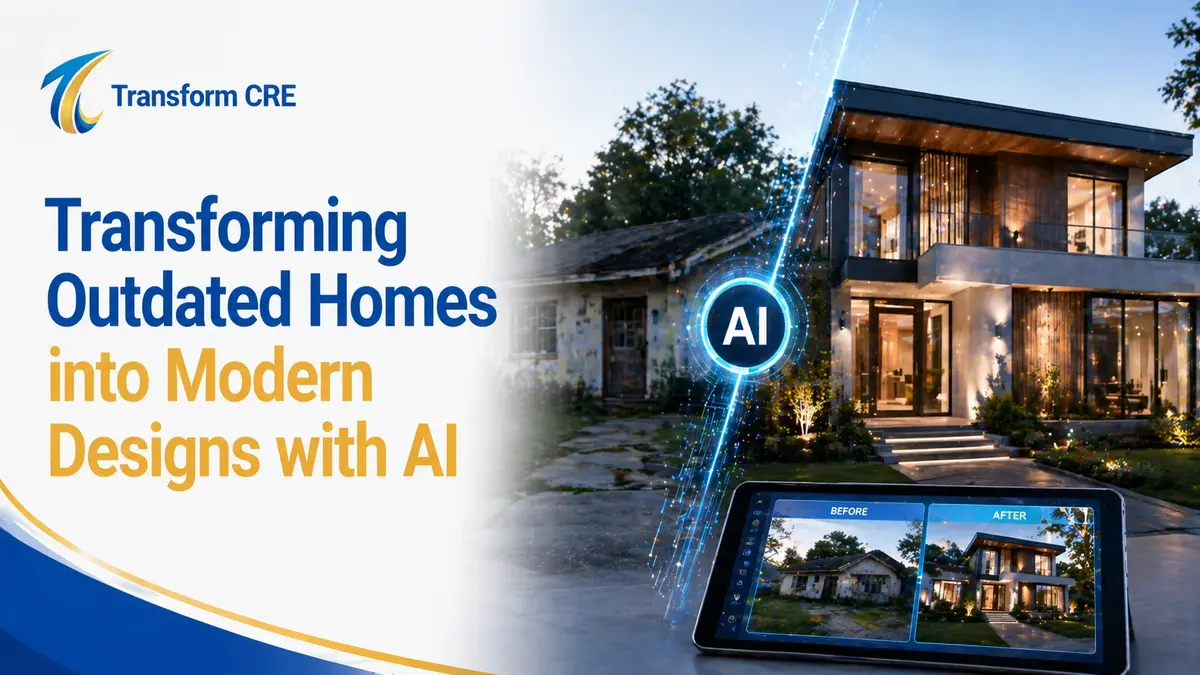
Transforming Outdated Homes into Modern Designs with AI
Outdated homes often suffer from inefficient layouts, aging materials, and designs that no longer meet modern living standards. Traditional renovation methods can be complex, costly, and uncertain. Today, AI home renovation is transforming how homeowners upgrade their spaces by introducing data-driven, efficient, and personalized solutions.
With AI-powered home design, users can upload a photo of their home and use AI design tools to generate realistic 3D renders and virtual remodeling concepts. These AI-generated designs allow homeowners to visualize, customize, and optimize their spaces before making physical changes. From selecting paint colors to exploring different design styles, AI makes the home renovation process more user-friendly, precise, and cost-effective.
Unlike traditional approaches, AI-driven home renovation uses design automation, predictive analytics, and smart remodeling solutions to improve decision-making and reduce risks. Whether it involves AI interior design tools or AI exterior home renovation, this modern approach enables faster planning, accurate cost estimation, and enhanced creativity.
As a result, home renovation AI is shifting the industry toward a more automated, intelligent, and scalable workflow, allowing homeowners to redesign, modernize, and improve their homes with greater confidence and efficiency.
AI in Home Renovation
AI in home renovation refers to the use of intelligent technologies such as machine learning, design automation, and advanced home design software to improve how spaces are planned, redesigned, and remodeled. Instead of relying on manual processes, AI home renovation uses data-driven systems to analyze layouts, generate design options, and support better decision-making.
With AI-powered design tools, homeowners and professionals can automate key tasks like layout planning, interior redesign, and material selection. These tools use generative design and 3D visualization to create realistic models, allowing users to visualize outcomes and refine ideas before execution. This approach improves both accuracy and efficiency in the overall renovation workflow.
In modern home remodeling, smart remodeling solutions powered by AI help reduce guesswork by predicting costs, optimizing space, and streamlining project planning. As adoption grows, AI is becoming an essential part of renovation strategies, enabling faster, more precise, and scalable home transformation processes.
Challenges of Outdated Homes
Outdated homes present several renovation challenges that make modernization both necessary and complex. Common issues such as inefficient layouts, aging structures, and rising costs highlight the limitations of traditional approaches. These old house problems often lead to poor functionality, higher expenses, and uncertain outcomes, making outdated home renovation a demanding process. This is where AI home renovation and smart remodeling solutions provide a more efficient and data-driven alternative.
Inefficient Layouts and Poor Space Utilization
Older homes often feature closed floor plans and underutilized spaces that do not align with modern living needs. These layouts reduce natural light, limit functionality, and create poor flow between rooms. With AI for home layout redesign and advanced space optimization techniques, homeowners can restructure, optimize, and improve their floor plans to achieve a more open and functional design.
Aging Materials and Structural Limitations
Many outdated homes suffer from deteriorating materials and outdated construction methods. These structural issues can impact safety, durability, and long-term value. Using AI renovation tools, homeowners can analyze, evaluate, and predict potential risks, enabling better renovation planning and more informed decisions during the home improvement process.
Lack of Modern Aesthetics and Functionality
Outdated interiors often lack both visual appeal and practical features expected in modern homes. Limited storage, poor lighting, and old design styles reduce overall comfort and usability. With AI interior design tools and AI-powered home design, homeowners can modernize, personalize, and enhance their spaces with contemporary aesthetics and improved functionality.
High Renovation Costs and Planning Complexity
Traditional renovation projects are often associated with budget overruns and complex planning processes. Uncertainty in material costs and design decisions can increase overall expenses. AI home renovation cost estimation and AI renovation software help predict, plan, and streamline budgeting, making the process more cost-effective and manageable while reducing risks.
How AI Transforms Home Renovation
AI is transforming home renovation by introducing automation, visualization, personalization, and predictive analytics into every stage of the process. Unlike traditional methods that rely heavily on manual planning, AI-driven home renovation uses data and intelligent systems to analyze, generate, and optimize design solutions. This shift enables faster, more accurate decision-making and reduces uncertainty across the entire renovation lifecycle.
With AI design tools and smart remodeling solutions, homeowners can move from concept to execution with greater efficiency. From AI home design to project planning, AI supports a seamless and scalable renovation workflow that improves both speed and outcomes.
AI-Powered Design Automation
AI-powered home design tools use generative design and design automation to create, optimize, and refine layouts based on user inputs. These systems can automatically generate floor plans, suggest layout improvements, and produce digital blueprints within seconds. This reduces manual effort and allows for quick design iterations, making the renovation process more efficient and responsive.
3D Visualization and Virtual Remodeling
With virtual home remodeling AI and advanced 3D visualization, homeowners can view realistic representations of their renovated spaces before construction begins. Using 3D rendering and virtual modeling, users can visualize, simulate, and adjust designs in real time. This improves clarity, reduces errors, and supports better decision-making through accurate before-and-after comparisons.
Personalized Design Recommendations
AI enables highly personalized and user-centric design by analyzing preferences, lifestyle needs, and design trends. Through intelligent recommendation systems, homeowners receive tailored suggestions for layouts, materials, and finishes. This allows users to customize, enhance, and reimagine their spaces with designs that align with both functionality and aesthetics.
Predictive Analysis and Cost Estimation
Predictive analytics plays a key role in improving renovation planning. AI tools can predict costs, evaluate resources, and estimate timelines based on data-driven insights. With AI home renovation cost estimation, homeowners can plan budgets more accurately, reduce financial risks, and ensure a more controlled and cost-effective renovation process.
Step-by-Step Process to Use AI for Home Renovation
Understanding how to use AI for home renovation requires a structured, data-driven workflow where AI design tools, 3D visualization, and predictive analytics guide the entire renovation process. This AI home renovation workflow enables homeowners to move from initial assessment to final execution with improved accuracy, efficiency, and control.
Step 1: Assess Current Home Condition
The process begins with a detailed evaluation of the home’s layout, structural condition, and functional limitations. Outdated homes often feature inefficient floor plans, poor natural lighting, and underutilized spaces that reduce usability. By using AI home renovation tools or analyzing a photo of your home, homeowners can identify key problem areas and establish clear renovation goals, creating a strong, data-driven foundation for the entire home transformation strategy.
Step 2: Input Data into AI Tools (Images, Dimensions, Preferences)
Once the assessment is complete, users input accurate data into AI design platforms, including images, room dimensions, and personal preferences such as design styles, paint colors, and layout requirements. Many tools allow users to upload a photo and generate insights based on real conditions. This step is critical because AI-generated designs rely on input quality, and precise data ensures more realistic, personalized, and optimized outputs across the renovation workflow.
Step 3: Generate AI-Based Design Concepts
Using AI design tools and generative design systems, the platform generates multiple layout options and AI-generated designs that include 3D renders, virtual staging, and layout variations. These concepts allow homeowners to visualize how AI transforms your space in real time, compare different design approaches, and evaluate both aesthetics and functionality before making any physical changes, reducing uncertainty and improving decision-making.
Step 4: Customize and Refine Layouts
After selecting a preferred concept, homeowners can customize and refine layouts by adjusting materials, colors, furniture placement, and structural elements to better match their lifestyle and needs. This stage combines human creativity with AI-powered recommendations, enabling users to optimize space, improve flow, and enhance both functionality and aesthetics, resulting in a more personalized, modern, and user-centric home design.
Step 5: Plan Budget and Materials
AI plays a critical role in cost estimation and material planning by analyzing project requirements and predicting expenses using data-driven insights. With AI home renovation cost estimation tools, homeowners can evaluate budgets, select cost-effective materials, and optimize resource allocation, making the renovation process more efficient, predictable, and financially controlled while minimizing the risk of unexpected costs.
Step 6: Execute Renovation with AI-Guided Insights
In the final stage, the renovation is executed using AI-guided insights and predictive recommendations that help monitor progress, identify potential issues, and improve coordination between planning and construction. AI enables homeowners and professionals to streamline workflows, reduce errors, and ensure alignment between the digital design and the physical outcome, resulting in a more accurate, efficient, and successful home renovation process.
Benefits of Using AI in Home Transformation
The benefits of AI in home renovation go beyond simple automation, offering a more intelligent, efficient, and data-driven approach to modernizing spaces. With AI home transformation, homeowners can improve design accuracy, reduce costs, and achieve highly personalized results. By combining AI design tools, predictive analytics, and smart remodeling solutions, AI enhances both the renovation experience and the final outcome, making the process more scalable, reliable, and user-centric.
Faster Design and Decision-Making
One of the most significant advantages of AI home renovation is the speed at which designs can be created and evaluated. Through design automation and AI tools, homeowners can generate layouts, explore AI-generated designs, and visualize outcomes using 3D renders within minutes. This eliminates delays associated with manual planning and enables faster approvals, allowing users to analyze, compare, and finalize decisions more efficiently while maintaining a high level of accuracy.
Cost Efficiency and Reduced Errors
AI improves cost estimation, budgeting, and error reduction by using data-driven insights to predict expenses and optimize resource allocation. With AI home renovation cost estimation and predictive analytics, homeowners can plan, evaluate, and control budgets more effectively, reducing the risk of costly mistakes during both design and execution. This leads to a more cost-effective, precise, and streamlined renovation process with fewer unexpected issues.
Enhanced Creativity and Personalization
AI enables a higher level of creativity and personalization by generating tailored design recommendations based on user preferences, lifestyle needs, and current trends. Using AI-powered home design and recommendation systems, homeowners can customize layouts, select design styles, and refine aesthetic elements to create unique and functional spaces. This results in a more personalized, adaptive, and user-centric home design experience that aligns with individual expectations.
Improved Space Optimization
Through AI for home layout redesign and advanced space optimization techniques, AI helps homeowners make better use of available space. It can analyze floor plans, restructure layouts, and improve flow to enhance both functionality and comfort. This is especially valuable in compact or outdated homes, where optimized, efficient, and functional designs can significantly improve the overall living experience.
Sustainable and Energy-Efficient Solutions
AI also supports sustainable home renovation by recommending energy-efficient designs, materials, and systems. With AI for sustainable home renovation, homeowners can evaluate energy usage, select eco-friendly materials, and optimize environmental impact. This results in more sustainable, cost-effective, and future-ready homes that balance performance, efficiency, and environmental responsibility.
Limitations and Considerations of AI in Renovation
While AI home renovation offers significant advantages, it is important to understand the limitations of AI in home renovation to maintain realistic expectations. AI improves efficiency, automation, and decision-making, but it is not a complete replacement for human expertise or real-world execution. Addressing these AI remodeling challenges helps homeowners use technology more effectively while balancing data-driven insights with practical experience.
Dependence on Data Quality
One of the key AI design risks is its reliance on accurate input data. AI systems depend on precise images, measurements, and user preferences to generate reliable outputs, and even small inaccuracies can lead to flawed AI-generated designs. Ensuring high-quality data input, such as correct dimensions and clear visuals, is essential for maintaining AI reliability, design accuracy, and effective renovation planning.
Lack of Human Craftsmanship Nuance
Although AI can analyze patterns and generate designs, it cannot fully replicate the intuition and experience of skilled professionals. Real-world renovation often involves complex conditions, material behavior, and on-site adjustments that require human expertise and craftsmanship. As a result, AI should be used as a supportive tool, while final decisions and execution still depend on professional judgment.
Tool Limitations and Learning Curve
Despite being user-friendly, many AI design tools come with limitations in features, flexibility, or integration. Users may also face a learning curve when adopting new platforms, especially when working with advanced functions like 3D visualization or design automation. Understanding these constraints helps users adapt, learn, and use AI tools more effectively within their renovation workflow.
Budget vs AI Recommendations Gap
AI systems often generate high-quality, optimized design suggestions that may not always align with real-world budget constraints. This creates a gap between AI recommendations and practical affordability, requiring users to evaluate, adjust, and refine plans based on financial limitations. Balancing AI insights with realistic budgeting ensures a more cost-effective and achievable renovation outcome.
Future of AI in Home Design and Remodeling
The future of AI in home renovation is focused on automation, predictive analytics, and smart home integration, making the entire process more efficient and data-driven. With AI-powered home design and evolving AI home design trends, homeowners can use 3D visualization, AR/VR, and virtual modeling to explore and refine designs before execution, improving accuracy and decision-making.
At the same time, AI-driven smart home ecosystems and generative design systems are enabling more automated and personalized renovation workflows. AI can generate layouts, estimate costs, and optimize planning while adapting to user preferences, resulting in functional, efficient, and highly personalized living spaces aligned with next-generation remodeling technology.
Tips for Getting Started with AI Home Renovation
If you are exploring how to start AI home renovation, begin with a clear and practical approach that combines AI renovation tools, planning strategy, and professional input. AI can significantly improve design and decision-making, but effective use depends on how you apply it in real scenarios.
Choose the right AI tools: Select AI design platforms based on your needs such as interior redesign, exterior renovation, or full home remodeling.
Start with a small project: Test AI on a single space like a living room to understand the AI home renovation workflow and generated designs.
Use AI for visualization and planning: Leverage 3D visualization, virtual modeling, and AI-generated designs to explore ideas before execution.
Set realistic budgets: Use AI home renovation cost estimation to plan expenses and avoid unexpected costs.
Combine AI with expert advice: Rely on professionals for structural decisions while using AI for design automation and planning.
Avoid over-reliance on AI: Evaluate and refine AI suggestions to ensure they align with practical constraints and real-world feasibility.
Following these AI remodeling tips helps create a more efficient, cost-effective, and well-structured home renovation process while maximizing the benefits of AI-driven solutions.