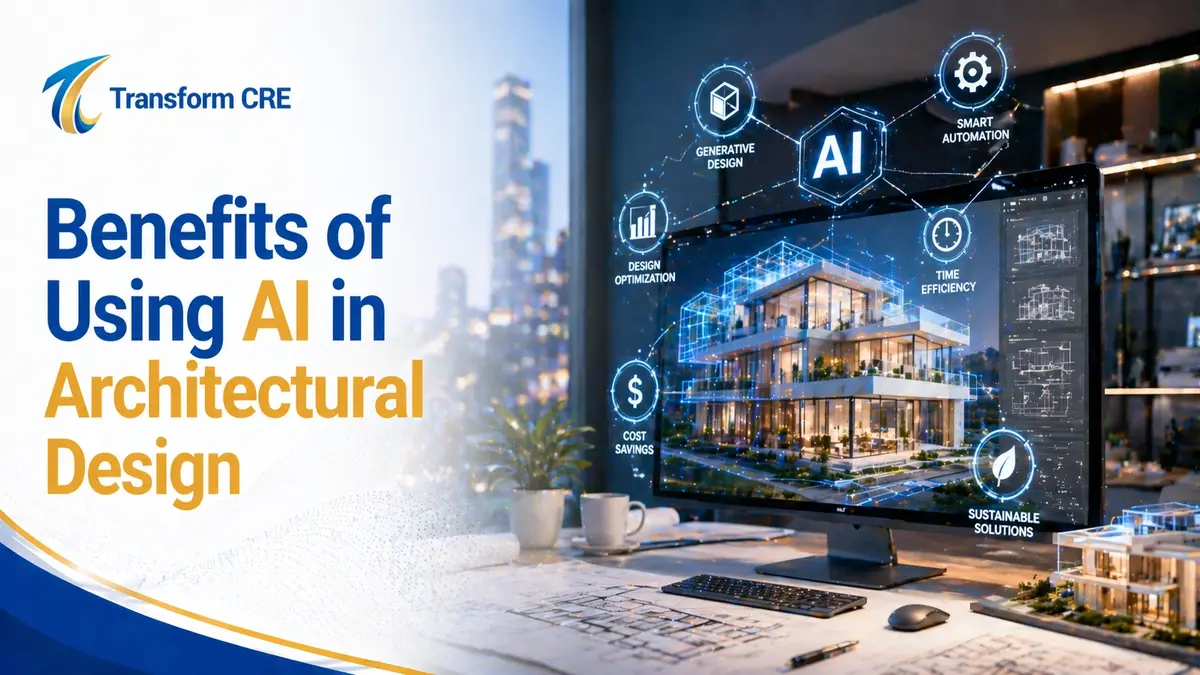
Benefits of Using AI in Architectural Design
Artificial intelligence (AI) is transforming architectural design by enabling faster, smarter, and more data-driven decision-making. As modern architecture becomes increasingly complex due to sustainability requirements, tight project timelines, and evolving client expectations, traditional design methods are often no longer sufficient. This is where AI in architecture plays a crucial role.
The benefits of using AI in architectural design include improved efficiency, enhanced creativity through generative design, greater accuracy, optimized building performance, and cost-effective project delivery. By integrating technologies such as Building Information Modeling (BIM), automation, and data-driven design systems, architects can streamline workflows, reduce errors, and design high-performance, sustainable buildings.
AI-powered tools also support smart building development and real-time analysis, allowing architects to respond more effectively to environmental conditions and user needs. As a result, AI is not just a technological advancement but a transformative force that is reshaping the architectural design process.
Introduction to AI in Architectural Design
Artificial intelligence (AI) in architectural design refers to the use of machine learning, algorithms, and data-driven systems to enhance, automate, and optimize the design process. Unlike traditional tools such as CAD, which rely heavily on manual input, AI-powered systems can analyze large datasets, generate design alternatives, and predict building performance with a high level of accuracy.
The evolution from conventional drafting methods to intelligent systems has significantly expanded the capabilities of architects. AI enables core functions such as data analysis, workflow automation, generative design, and predictive modeling. These capabilities allow architects to explore multiple design options, evaluate performance outcomes, and make informed decisions more efficiently.
AI is now applied across various stages of architecture, including conceptual design, construction planning, and urban development. It also plays a key role in creating smart buildings and sustainable environments by integrating real-time data and advanced analytics.
The growing adoption of AI in architecture is driven by increasing design complexity, the need for energy-efficient solutions, and the demand for greater accuracy and productivity. This foundation sets the stage for understanding the specific benefits AI brings to architectural design.
The Role of AI in Architectural Design Processes
AI in architectural workflows plays a critical role across the entire design lifecycle, from early concepts to construction and large-scale urban planning. Rather than functioning as a standalone tool, AI integrates into each phase of the design process, enabling continuous data flow, real-time analysis, and iterative optimization. This allows architects to move from static design methods to dynamic, data-driven workflows.
Across the design lifecycle, AI supports automation, simulation, and decision-making. It enhances speed by reducing manual tasks, improves accuracy through predictive modeling, and strengthens collaboration by integrating platforms such as BIM. From conceptual exploration to execution and smart city planning, AI enables a more connected and efficient approach to architecture. The following sections break down how AI functions at each stage of the process.
Conceptual Design and Ideation
In the early stages of architectural design, AI supports conceptual development through generative design and parametric modeling. By using algorithms, architects can generate multiple design options based on constraints such as space, materials, and environmental conditions. This approach accelerates design iteration and enables broader exploration of creative possibilities.
AI-assisted ideation allows architects to test different scenarios quickly, refining concepts based on performance data and design objectives. Instead of relying solely on manual sketches, designers can leverage computational tools to expand creativity while maintaining control over the design direction.
Design Development and Optimization
During design development, AI focuses on refining and optimizing architectural solutions. It analyzes building performance, evaluates material choices, and improves spatial layouts based on environmental and structural data. Simulation tools help assess energy efficiency, daylight exposure, and overall building performance.
By integrating real-time data and predictive modeling, AI enables more informed decisions throughout the design process. This leads to optimized outcomes that balance functionality, sustainability, and cost, while reducing the need for repeated revisions.
Construction and Project Execution
AI extends beyond design into construction planning and execution. It supports project management by optimizing scheduling, resource allocation, and workflow automation. Predictive analytics help identify potential risks, delays, and cost overruns before they occur.
With AI in construction management, teams can monitor progress in real time, improve coordination, and ensure that resources are allocated efficiently. This results in smoother project execution and more reliable delivery timelines.
Urban Planning and Smart Cities
At a broader scale, AI contributes to urban planning and the development of smart cities. By analyzing large datasets such as traffic patterns, population density, and environmental conditions, AI enables more efficient and sustainable urban design.
AI-driven urban planning supports the creation of smart infrastructure systems that adapt to real-time conditions. From transportation networks to energy distribution, these systems improve city functionality while promoting long-term sustainability and resilience.
Key Benefits of Using AI in Architectural Design
AI in architecture delivers measurable improvements across every stage of the design lifecycle, from concept development to long-term building operations. By integrating technologies such as generative design, BIM, automation, and predictive analytics, architects can improve creativity, efficiency, and decision-making. These benefits directly impact project timelines, cost control, sustainability, and overall building performance. The following points explain the key benefits of using AI in architectural design in a clear and practical way.
1. Enhanced Design Creativity and Innovation
AI expands design possibilities through generative design and parametric modeling. Instead of relying on a single concept, architects can generate multiple design options based on constraints such as space, materials, and environmental conditions. This allows the exploration of complex and unconventional forms.
AI supports creativity by assisting in idea generation while leaving final decisions to architects. This results in more innovative and balanced designs that combine aesthetics, functionality, and performance.
2. Increased Efficiency and Workflow Automation
AI improves efficiency by automating repetitive tasks such as drafting, modeling, and documentation. This reduces manual effort and speeds up design iterations.
Automation also improves workflow consistency and reduces delays. In real projects, this leads to faster delivery timelines and better use of resources across the architectural process.
3. Improved Accuracy and Error Reduction
AI increases accuracy by identifying design conflicts and inconsistencies early. When integrated with BIM, it can perform clash detection and validate design elements.
This reduces errors and minimizes rework during construction. As a result, projects achieve higher quality outcomes with fewer disruptions.
4. Optimized Building Performance and Energy Efficiency
AI analyzes environmental data, energy usage, and building performance to improve design outcomes. It can suggest optimal building orientation and material choices.
This leads to energy-efficient buildings with better long-term performance. It also supports sustainable design by reducing operational costs and environmental impact.
5. Cost Reduction and Resource Optimization
AI helps reduce costs by optimizing material usage and improving resource allocation. It can also provide accurate cost estimates and identify potential budget risks early.
This minimizes waste and prevents cost overruns. Over time, it contributes to more cost-effective project delivery and better financial planning.
6. Data-Driven Decision Making
AI processes large volumes of data to provide insights for decision-making. Architects can evaluate different design options and predict outcomes more accurately.
This enables evidence-based decisions rather than relying only on intuition. It improves reliability and aligns design choices with project goals.
7. Improved Project Management and Collaboration
AI supports project management by improving scheduling, coordination, and communication. It enables real-time tracking and data sharing across teams.
This improves collaboration between architects, engineers, and stakeholders. It also reduces misunderstandings and improves overall project efficiency.
8. Advanced Visualization and Client Experience
AI-powered tools such as VR and AR improve how designs are presented. Clients can explore and interact with designs before construction begins.
This improves understanding and speeds up approval processes. It ensures that the final design aligns more closely with client expectations.
9. Sustainability and Environmental Impact
AI supports sustainable architecture by optimizing energy use and recommending environmentally friendly materials. It helps reduce carbon emissions and supports climate-responsive design.
This allows architects to meet sustainability goals while maintaining performance and cost efficiency.
10. Predictive Maintenance and Lifecycle Management
AI extends its impact beyond design and construction into building operations. When combined with IoT and digital twins, it can monitor systems and predict maintenance needs.
This reduces downtime, extends the lifespan of buildings, and improves operational efficiency. Over time, it leads to better lifecycle management and cost savings.
Technologies Powering AI in Architecture
AI in architecture is enabled by a combination of advanced technologies that work together to improve design, analysis, and execution. These technologies form an integrated ecosystem where data flows continuously across tools and systems, supporting better decision-making and optimized workflows. Instead of operating in isolation, solutions such as BIM, generative design, machine learning, and IoT connect different stages of the architectural lifecycle.
By combining real-time data, simulation, and automation, these technologies allow architects to design more efficiently, evaluate performance accurately, and manage projects more effectively. Understanding how each technology contributes to the process helps explain how AI delivers its benefits in architectural design.
Building Information Modeling (BIM)
Building Information Modeling is a centralized digital model system that integrates all aspects of a building’s design and data. When enhanced with AI, BIM enables real-time updates, automated clash detection, and seamless data integration across disciplines.
This improves collaboration between architects, engineers, and stakeholders by ensuring that everyone works from a consistent and up-to-date model. BIM also supports the entire building lifecycle, from design and construction to operation and maintenance, making it a core technology in AI-driven architecture.
Generative Design Tools
Generative design tools use algorithms to create multiple design solutions based on defined parameters such as materials, cost, and performance requirements. Instead of manually developing a single concept, architects can explore a wide range of optimized options.
These tools are especially valuable in early-stage design, where rapid iteration and evaluation are critical. By combining parametric design and computational logic, generative design helps identify efficient and innovative solutions that meet both functional and environmental goals.
Digital Twins and Simulation
Digital twins are virtual replicas of physical buildings that allow architects and engineers to simulate real-world performance. These models use real-time data to monitor building behavior and test different scenarios before implementation.
Through simulation, designers can evaluate energy performance, structural behavior, and system efficiency. Digital twins also play a key role in maintenance and operations by providing insights into how buildings perform over time, supporting better lifecycle management.
Machine Learning and Predictive Analytics
Machine learning enables AI systems to learn from data patterns and improve over time. In architecture, it is used to analyze design data, predict performance outcomes, and identify potential risks.
Predictive analytics supports decision-making by forecasting issues such as structural weaknesses, energy inefficiencies, or maintenance needs. This allows architects and project managers to make proactive decisions that improve reliability and optimize results.
VR, AR, and Extended Reality (XR)
Virtual reality, augmented reality, and extended reality technologies provide immersive visualization tools for architectural design. These technologies allow users to explore and interact with designs in real time.
They enhance communication between architects and clients by making complex designs easier to understand. By enabling real-time feedback and design validation, XR technologies reduce misunderstandings and improve the overall design process.
Internet of Things (IoT) in Smart Buildings
The Internet of Things connects devices and sensors within buildings to collect real-time data on systems such as energy, lighting, and HVAC. This data is then analyzed by AI to optimize building performance.
In smart buildings, IoT enables automated control systems that improve efficiency, reduce energy consumption, and enhance occupant comfort. By integrating IoT with AI, architects can design buildings that are more responsive, adaptive, and efficient throughout their lifecycle.
Real-World Applications and Case Studies
AI in architecture is no longer theoretical; it is actively being used in real-world projects to improve design efficiency, reduce costs, and enhance sustainability. Across residential, commercial, and urban-scale developments, AI-driven tools are helping architects and engineers make faster, more informed decisions.
These real-world applications demonstrate how AI delivers tangible value, from optimizing space utilization to enabling energy-efficient buildings and smarter cities. By bridging the gap between design concepts and execution, AI is transforming how architectural projects are planned, built, and managed.
AI in Residential and Commercial Projects
AI is widely used in residential design and commercial architecture to improve space planning and functionality. AI-powered tools can generate optimized floor plans based on user requirements, spatial constraints, and building regulations. This helps architects design more efficient and user-centric spaces.
In commercial projects, AI enhances office layouts by analyzing occupancy patterns and workflow needs. Smart building systems further improve performance by automating lighting, temperature, and energy usage. These applications lead to faster design processes, improved user experience, and more efficient building operations.
Sustainable and Green Building Design
AI plays a critical role in sustainable architecture by enabling data-driven environmental analysis and performance optimization. Architects use AI to simulate energy consumption, evaluate material choices, and design buildings that respond to climate conditions.
For example, AI can optimize building orientation for natural light and ventilation, reducing energy usage. It can also recommend sustainable materials and integrate renewable energy systems. These capabilities contribute to lower carbon emissions and more environmentally responsible construction practices.
AI in Large-Scale Urban Development
At the urban level, AI supports planning and infrastructure development by analyzing large datasets such as traffic flow, population density, and environmental factors. This allows planners to design more efficient and connected urban environments.
Smart city systems use AI to optimize transportation networks, manage energy distribution, and improve public services. Infrastructure simulations help predict long-term outcomes and support sustainable urban growth. These applications make cities more resilient, efficient, and responsive to changing demands.
AI for Affordable Housing and Cost Optimization
AI is also addressing challenges in affordable housing by reducing construction time and costs. Through AI-driven cost estimation and resource allocation, developers can plan projects more efficiently and avoid budget overruns.
In addition, AI supports modular and prefabricated construction methods, which accelerate building timelines and reduce material waste. By optimizing design and construction processes, AI enables scalable housing solutions that are both cost-effective and sustainable.
Challenges and Limitations of AI in Architecture
While AI in architecture offers significant advantages, it also comes with practical and strategic challenges that can impact adoption. Understanding these limitations helps architects and firms implement AI more effectively and responsibly.
1. High Implementation Costs
AI adoption requires significant investment in software, hardware, and infrastructure. For small and mid-sized firms, these costs can be a major barrier, especially when combined with integration expenses and ongoing maintenance.
2. Skill Gaps and Learning Curve
Many professionals in the architecture industry lack expertise in AI, machine learning, and data-driven design. This creates a steep learning curve and requires training, upskilling, and a shift in traditional workflows.
3. Data Dependency and Quality Issues
AI systems rely on large volumes of accurate and structured data. Poor-quality or incomplete data can lead to unreliable outputs, affecting design accuracy and decision-making.
4. Integration with Existing Workflows
Integrating AI with legacy systems such as traditional CAD tools can be challenging. It may disrupt existing workflows and require significant adjustments in processes and team coordination.
5. Ethical and Creative Concerns
There are ongoing concerns about authorship, design ownership, and bias in AI-generated outputs. Some professionals also worry about the potential impact of AI on human creativity and originality.
6. Over-Reliance on Automation
Excessive dependence on AI tools can reduce human oversight. Without proper validation, this may lead to design flaws or inappropriate solutions being implemented.
7. Security and Data Privacy Risks
AI systems often handle sensitive project and client data. This raises concerns about data security, especially when using cloud-based platforms that may be vulnerable to cyber threats.
Human Architects vs AI: Collaboration, Not Replacement
The rise of AI in architecture has sparked an important question: will AI replace architects? While AI is transforming the architecture design process, it is not a replacement for human expertise. Instead, it acts as a powerful tool that enhances how architects work, enabling more efficient, data-driven, and innovative design workflows.
AI excels at processing large datasets, automating repetitive tasks, and generating optimized design options. However, architectural design is not purely technical—it requires creativity, intuition, and an understanding of human experience. This is where human architects remain essential. The future of architecture lies in a collaborative model where AI supports decision-making while architects guide the creative and strategic direction.
Role of Human Creativity and Intuition
Human architects bring creativity, intuition, and a deep understanding of cultural and social context to the design process. They interpret user needs, emotional experiences, and environmental factors in ways that AI cannot replicate.
While AI can generate multiple design options, it lacks subjective judgment and artistic vision. Architects play a critical role in evaluating, refining, and selecting the most appropriate solutions. This human-centered approach ensures that designs are not only functional but also meaningful and responsive to real-world needs.
AI as a Design Assistant (Co-pilot Model)
AI functions best as a design assistant rather than a decision-maker. In this co-pilot model, AI handles tasks such as data analysis, automation, and optimization, allowing architects to focus on higher-level thinking.
By supporting faster iterations and providing data-driven insights, AI improves efficiency without removing human control. Architects remain responsible for final decisions, ensuring that technology enhances rather than dictates the design process.
Skills Architects Need in the AI Era
As AI becomes more integrated into architectural workflows, the required skill set for architects is evolving. Professionals need to develop AI literacy, data analysis capabilities, and an understanding of computational design tools.
In addition to technical skills, critical thinking and interdisciplinary collaboration are becoming increasingly important. Architects must be able to interpret AI-generated outputs, question assumptions, and adapt to new technologies. Combining creative expertise with technical knowledge will be essential for success in the AI-driven architecture industry.
Future of AI in Architectural Design
AI in architecture is still evolving, and its future points toward deeper integration, greater automation, and more intelligent design systems. As technologies continue to advance, AI is expected to play an even more central role in shaping how buildings and cities are designed, constructed, and managed.
The future of AI in architectural design will be driven by emerging technologies, smarter urban systems, and adaptive building environments. These developments will not only improve efficiency but also redefine sustainability, performance, and user experience across the built environment.
Emerging Technologies and Trends
Emerging technologies such as generative AI, machine learning, and robotics are set to transform architectural workflows. Generative AI will continue to enhance design exploration by producing highly optimized and complex solutions based on multiple constraints.
Robotics in construction will automate labor-intensive tasks, improving speed and precision. Natural language processing will enable AI assistants that support architects in design and documentation. Advanced simulation tools will further improve performance analysis, allowing architects to test scenarios before implementation. As these technologies integrate into design platforms, fully automated and continuously improving workflows will become more common.
AI-Driven Sustainable Cities
AI will play a key role in developing sustainable and climate-responsive cities. By analyzing real-time data from energy systems, transportation networks, and infrastructure, AI can optimize how cities function and adapt to changing conditions.
Smart city ecosystems will use AI to reduce energy consumption, improve traffic flow, and manage resources more efficiently. This will lead to lower carbon emissions and more sustainable urban environments. As urban populations grow, AI-driven planning will become essential for creating resilient and efficient cities.
Autonomous and Adaptive Buildings
The future of architecture includes buildings that can monitor and adapt themselves in real time. By integrating AI with IoT devices and digital twins, buildings can continuously analyze performance and adjust systems such as energy usage, lighting, and climate control.
These autonomous and adaptive buildings will improve occupant comfort while optimizing efficiency and reducing operational costs. This shift toward intelligent environments represents a move from static structures to responsive systems that evolve based on real-time data and user needs.